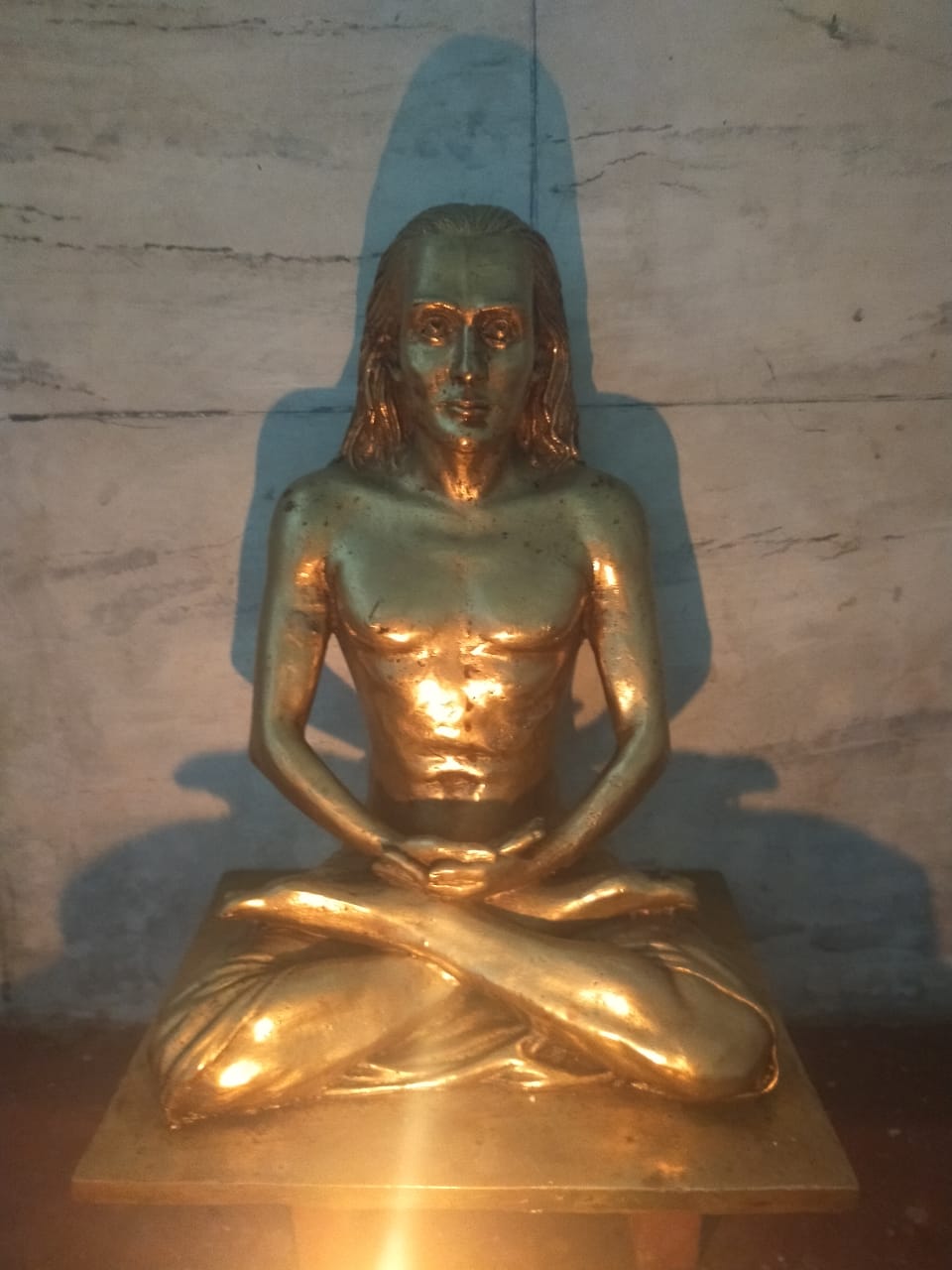

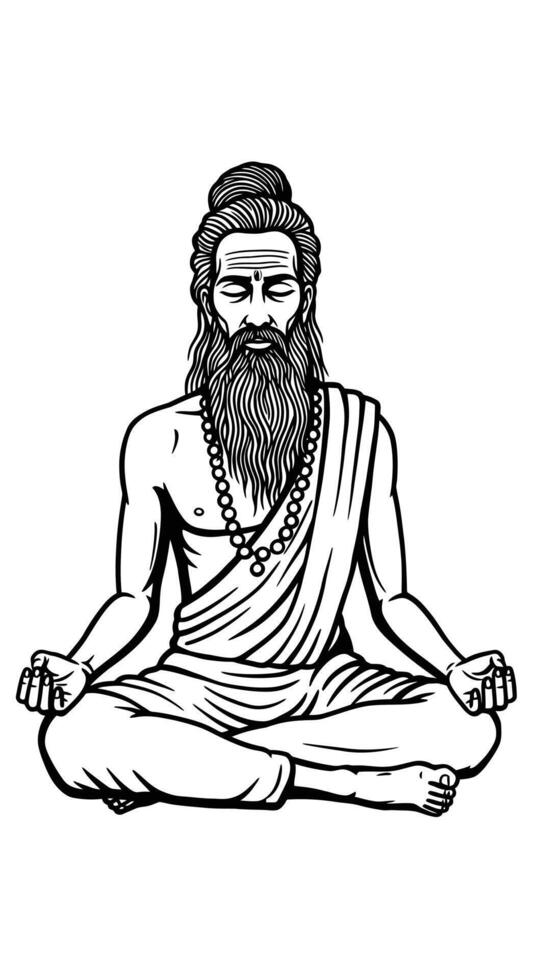
Importance of correct posture in meditation.
Many people practice Kriyā Yoga and meditation for a long time, yet many still feel that they are not able to experience complete bliss, perfect stillness, or true happiness. Meditation is often associated with mental focus, but physical posture plays an equally important role. In the Bhagavad Gītā , Lord Śrī Krishna explains the ideal meditation posture:
“samaṁ kāya-śiro-grīvaṁ dhārayann acalaṁ sthiraḥ,
samprekṣya nāsikāgraṁ svaṁ diśaś cānavalokayan.”
Here lord Sri Krishna instructs the practitioner to hold the body, neck, and head in one straight line. People often doze off to sleep during meditation. But this does not happen while eating food or doing activities that involve senses.That is why Lord Sreekrishna instructed us to sit erect.
Our spine is the main channel for the flow of energy, or prāṇa. Sitting in the correct posture helps you remain alert and attentive. If you sit in a bent position, the body may feel relaxed at first, but soon, it can lead to dozing off or sleep. At the same time, you should not hold the body stiff as this creates tension and disturbs the flow of dhyāna (meditation).
Proper alignment of the body maintains a balance between alertness and relaxation. With regular practice, the body becomes more comfortable in this posture, which gradually leads to higher states of consciousness and awareness. As Patañjali describes in the Yoga Sūtra’ sthira-sukham āsanam’—a posture should be steady and easeful.
According to me, the correct posture can be attained through the following steps. First, sit comfortably in Padmāsana, Ardha Padmāsana, or Siddhāsana. Those who have knee problems may sit on a chair, provided they remain erect and motionless. Lock the hands near the knees in Chin Mudrā or Jñāna Mudrā with your arms gently straightened. This naturally helps the body stay straight without much effort.
Finally, keep the head raised and aligned with the spine. Straight alignment allows the lungs to expand and helps a deeper breathing. It also stabilizes our emotions.
Lift your chin slightly—not bent down or raised too high—so that the head, neck, and spine remain aligned. Roll your shoulders back and let them drop gently. Close your eyes and allow your breath to flow naturally. This will help your posture remain steady and aligned.
Practicing a well-aligned posture will definitely lead you to a deeper state of stillness and allow you to experience true happiness.
Namaste🙏
Leave a Reply